CAST papers are the foundation of CAST’s science communication work. Developed by expert-led task forces, these peer-reviewed publications translate agricultural science into trusted insights that inform policy, guide public understanding, and fuel CAST programs, dialogues, and educational initiatives.
Search Publications

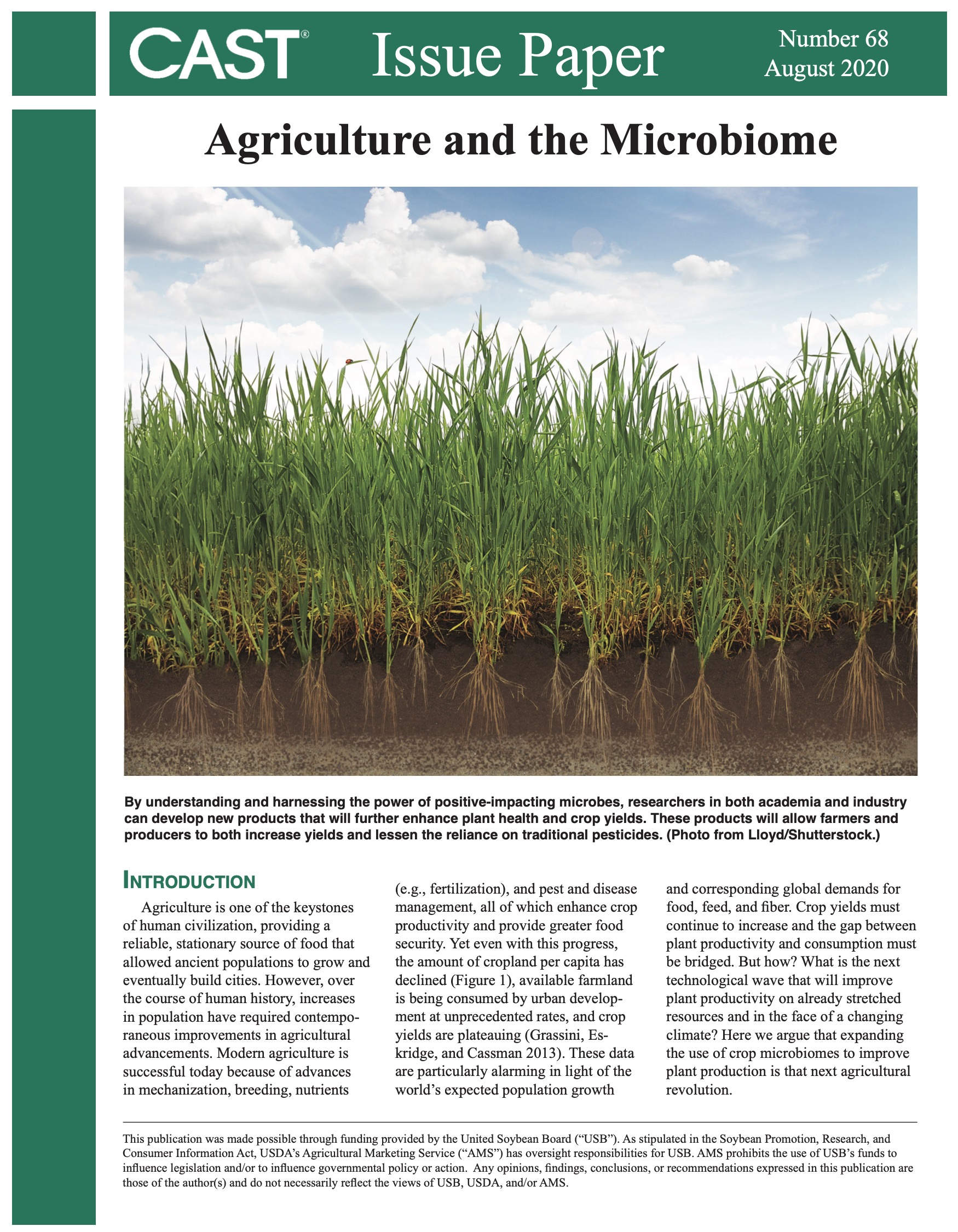
Agriculture and the Microbiome

DOI:
Task Force Chairs
North Carolina State University
Authors
North Carolina State University
NewLeaf Symbiotics
North Carolina State University
University of North Carolina at Chapel Hill
University of Minnesota
Colorado State University
Novozymes North America, Inc.
SAS Institute, Inc.
University of Massachusetts Medical School
Alliance of Crop, Soil, and Environmental Science Societies
Noble Research Institute
Novozymes North America, Inc.
Abstract
Global agricultural systems face intensifying pressure from population growth, declining cropland per capita, and plateauing crop yields. This issue paper argues that crop microbiomes represent the next major frontier for improving agricultural productivity. The "phytobiome" — the integrated system of plants, associated microorganisms, and their geophysical environment — profoundly influences plant health, nutrient cycling, pathogen resistance, and stress tolerance. Advances in high-throughput DNA sequencing, metagenomics, metatranscriptomics, metabolomics, and machine learning now allow researchers to characterize microbial communities at a scale and resolution previously unattainable, moving beyond single-organism studies toward a systems-level understanding of plant-soil microbiome dynamics. Biological products derived from microbes — including biopesticides and biostimulants — are already commercially available and growing in market value, yet significant gaps remain in translating laboratory results into consistent, field-ready products. Key challenges include improving product efficacy across diverse geographies and environments, navigating the regulatory landscape overseen by the EPA, USDA-APHIS, and FDA, and effectively communicating the science to growers, policymakers, and the public. The paper further argues that progress in this field requires new models of interdisciplinary graduate training, stronger academic-industry partnerships, and coordinated funding strategies. A case study on biological control of aflatoxin-producing Aspergillus flavus illustrates how fundamental research in fungal biology can directly inform applied biocontrol strategies. The task force concludes with specific recommendations for investment in phytobiome infrastructure, cutting-edge analytical technologies, science communication, and interdisciplinary education to unlock the full potential of microbiome-based solutions for global food security.
Downloads & Resources
Reviewers
International Alliance for Phytobiomes Research
Texas A&M University
CAST Liaisons
North Carolina Biotechnology Center
Translators