CAST papers are the foundation of CAST’s science communication work. Developed by expert-led task forces, these peer-reviewed publications translate agricultural science into trusted insights that inform policy, guide public understanding, and fuel CAST programs, dialogues, and educational initiatives.
Search Publications
Select Year
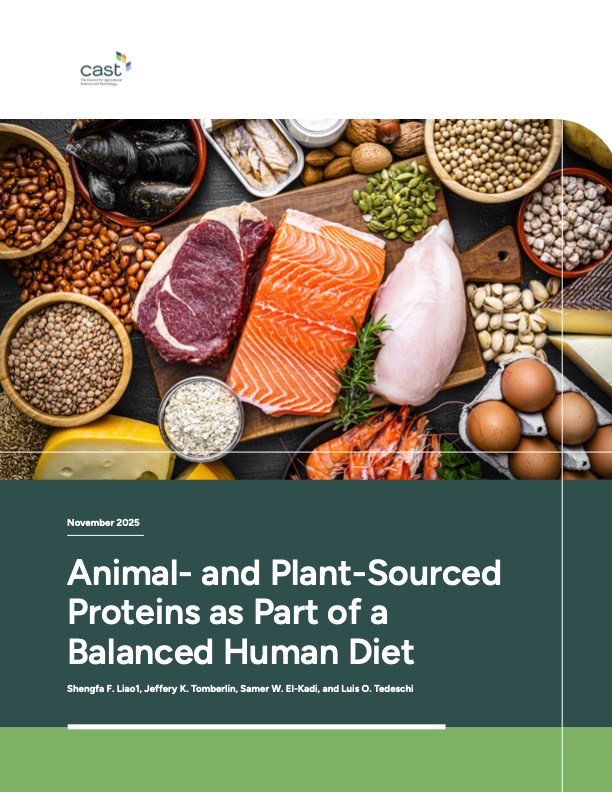
CAST_Protein-in-the-Diet
https://doi.org/10.62300/1zd2tn81
Protein quality, not just quantity, is critical for meeting human dietary needs. This paper reviews animal‑, plant‑, and emerging protein sources in terms of amino acid composition, digestibility, nutritional adequacy, and environmental impact. It highlights life‑stage–specific protein requirements, limitations of single‑source proteins, and the role of complementary proteins in balanced diets. Global patterns of protein availability, future demand, and sustainability challenges are examined. The paper concludes that diverse dietary protein sources, rather than exclusive reliance on plant or animal proteins, are essential for supporting human health and resilient food systems.
Task Force Chairs
Mississippi State University
Authors
Texas A&M University
Virginia Tech
Texas A&M University

CAST_Precision Irrigation Management
https://doi.org/10.62300/6b9hf011
This report examines the principles, technologies, and applications of precision irrigation across gravity, sprinkler, and microirrigation systems. It reviews variable rate irrigation, soil- and plant-based sensing, evapotranspiration monitoring, irrigation scheduling tools, and complementary technologies such as fertigation and data-driven decision support systems.
Task Force Chairs
Pennsylvania State University
Authors
University of Nevada, Reno
Texas A&M University
University of California, Davis
University of Idaho
United States Department of Agriculture
McGill University
McGill University
Kansas State University
McGill University
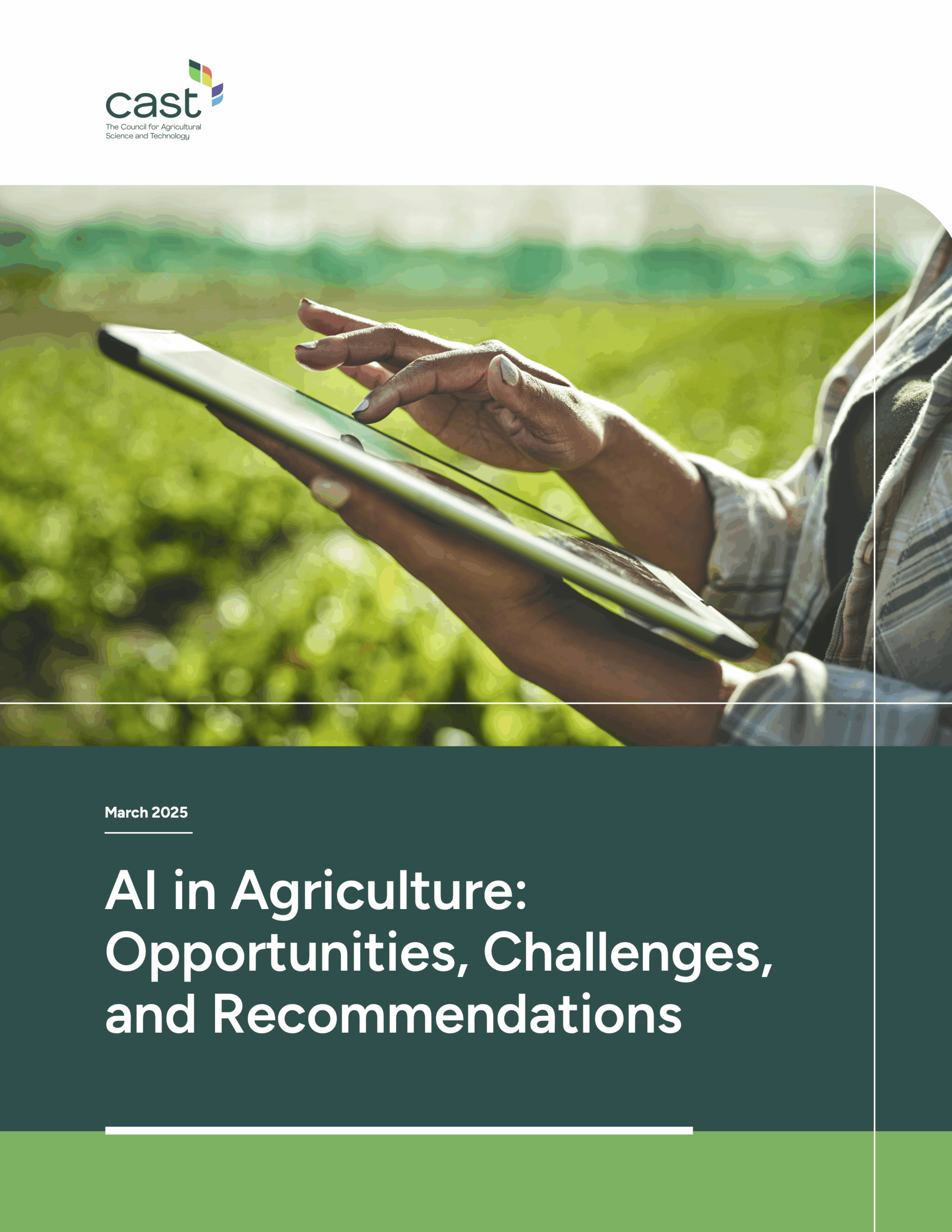
CAST_AI-in-Agriculture
https://doi.org/10.62300/IAAG042514
This report examines the current and emerging applications of AI in agriculture, including crop and livestock monitoring, precision management, yield prediction, disease and pest detection, automation, and supply chain optimization. It explores the data sources, algorithms, and digital infrastructure that underpin AI-driven systems, as well as the role of AI in enhancing sustainability, productivity, and resilience under climate and resource constraints.
Task Force Chairs
Mississippi State University
Authors
Oklahoma State University
Texas A&M University
University of Kentucky
Texas A&M University
Syngenta (United States)
Texas A&M AgriLife Research
University of Florida
Texas A&M University
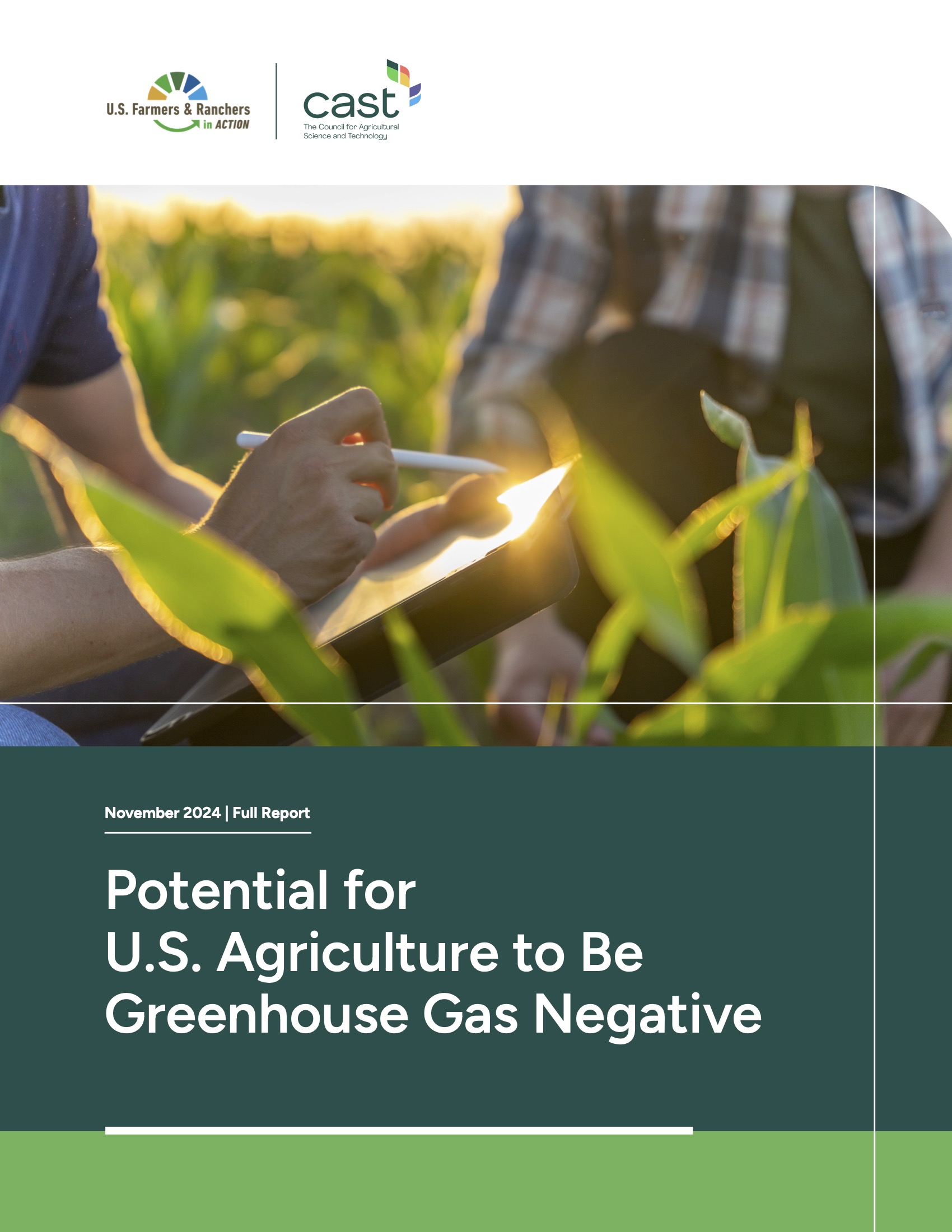
USFRA_CAST-FullReport
https://doi.org/10.62300/tfraya48
This report explores the potential for U.S. agriculture to achieve greenhouse gas (GHG) neutrality or become GHG-negative by integrating current and emerging practices across crop and livestock systems. The analysis identifies five major opportunity areas: soil carbon management, nitrogen fertilizer management, animal production and manure handling, crop production efficiency, and on-farm energy use. The report emphasizes the need for on-farm demonstrations, technical support, and policy incentives to overcome economic and technological barriers.
Task Force Chairs
Authors
Kansas State University
Colorado State University
Kansas State University
Pennsylvania State University
Colorado State University
University of Wisconsin–Madison
World Wildlife Fund
World Wildlife Fund
World Wildlife Fund
University of California, Davis
Kansas State University
North Carolina State University
University of Arkansas at Fayetteville
Colorado State University
Michigan State University
Agricultural Research Service
University of Illinois Urbana-Champaign
World Wildlife Fund
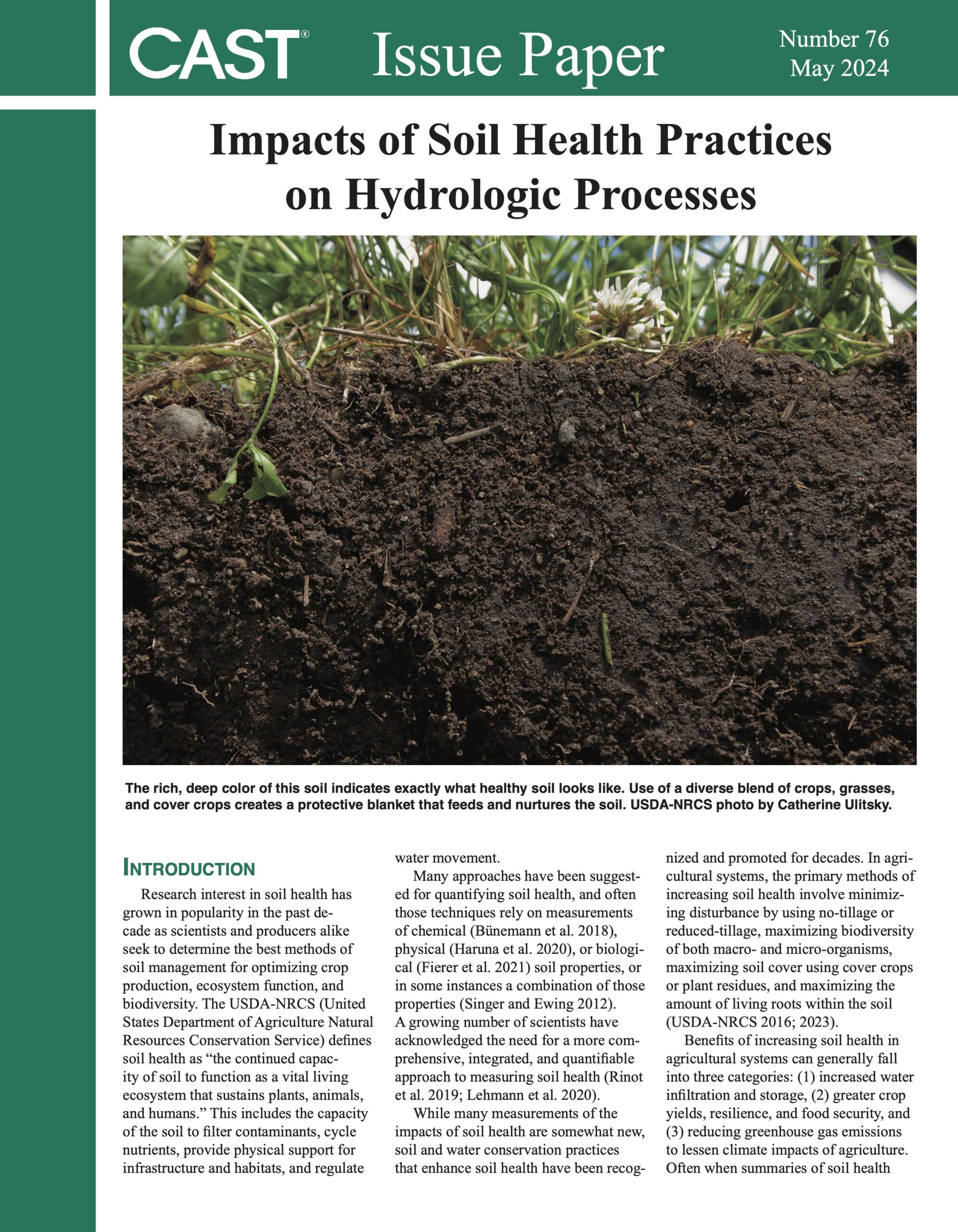
IP76-Soil-Health-scaled-1.jpg
https://doi.org/10.62300/QEOG5785
This paper synthesizes current research on the impacts of soil health practices—such as reduced tillage, cover cropping, and residue management—on hydrologic processes within agricultural and urban systems. These practices influence water infiltration, storage, and movement through the soil-water-atmosphere continuum, reducing runoff, erosion, and surface water contamination while potentially moderating flood risks.
Task Force Chairs
Texas A&M University
Authors
Iowa State University
National Laboratory for Agriculture and the Environment (retired)
United States Department of Agriculture
The Ohio State University
The Nature Conservancy
University of Illinois Urbana-Champaign
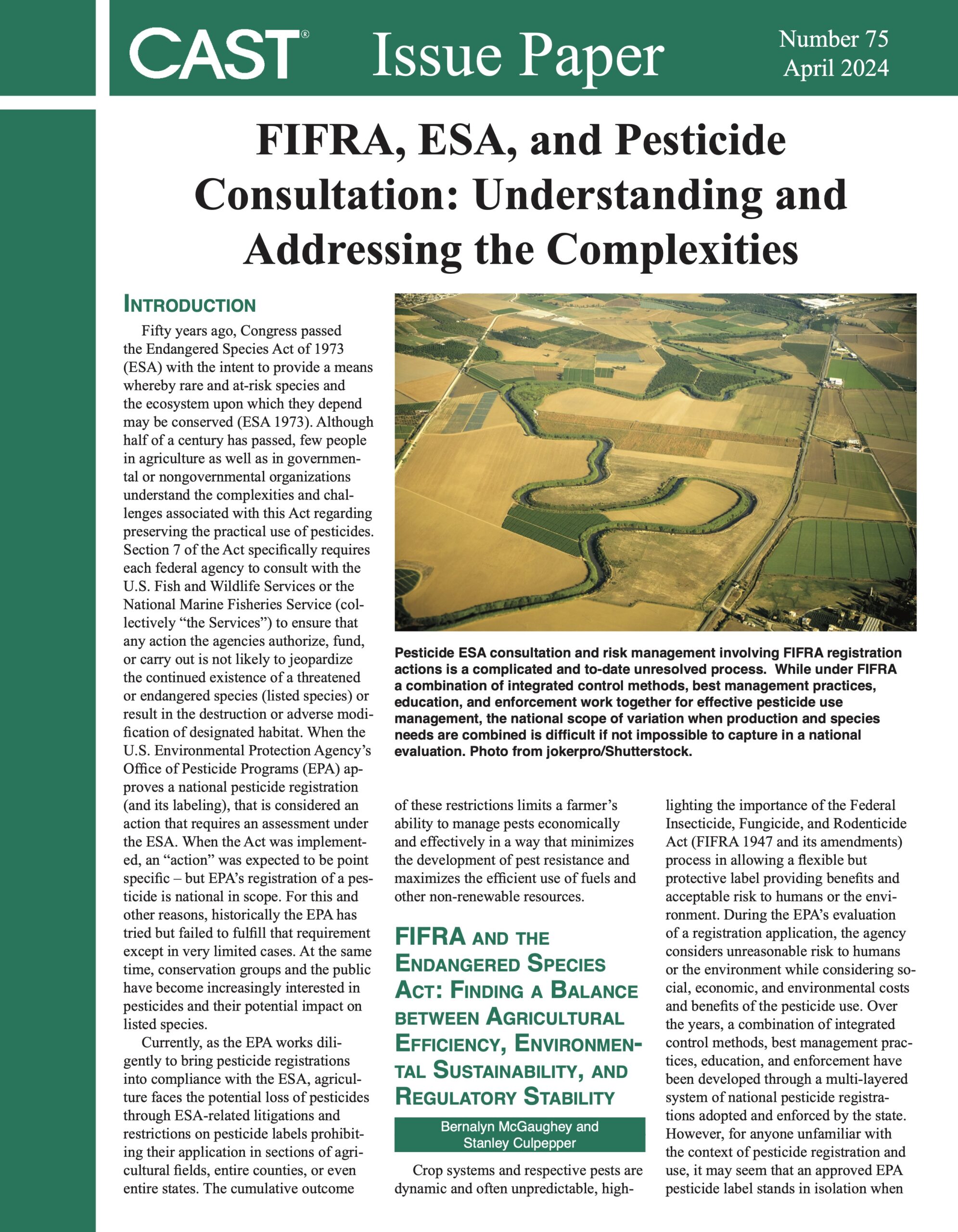
CAST_IP75-FFIRA-ESA-scaled-1.jpg
This paper explores the historical, legal, scientific, and practical dimensions of pesticide registration and endangered species protection.
Task Force Chairs
Compliance Services International
University of Georgia
Authors
Florida Fruit and Vegetable Association
Washington State Department of Agricul- ture
Syngenta Crop Protection
Compliance Services International
Northwest Horticultural Council
Florida Atlantic University
Compliance Services International
University of Georgia
National Agricultural Law Center
Integrated Plant Health Strategies
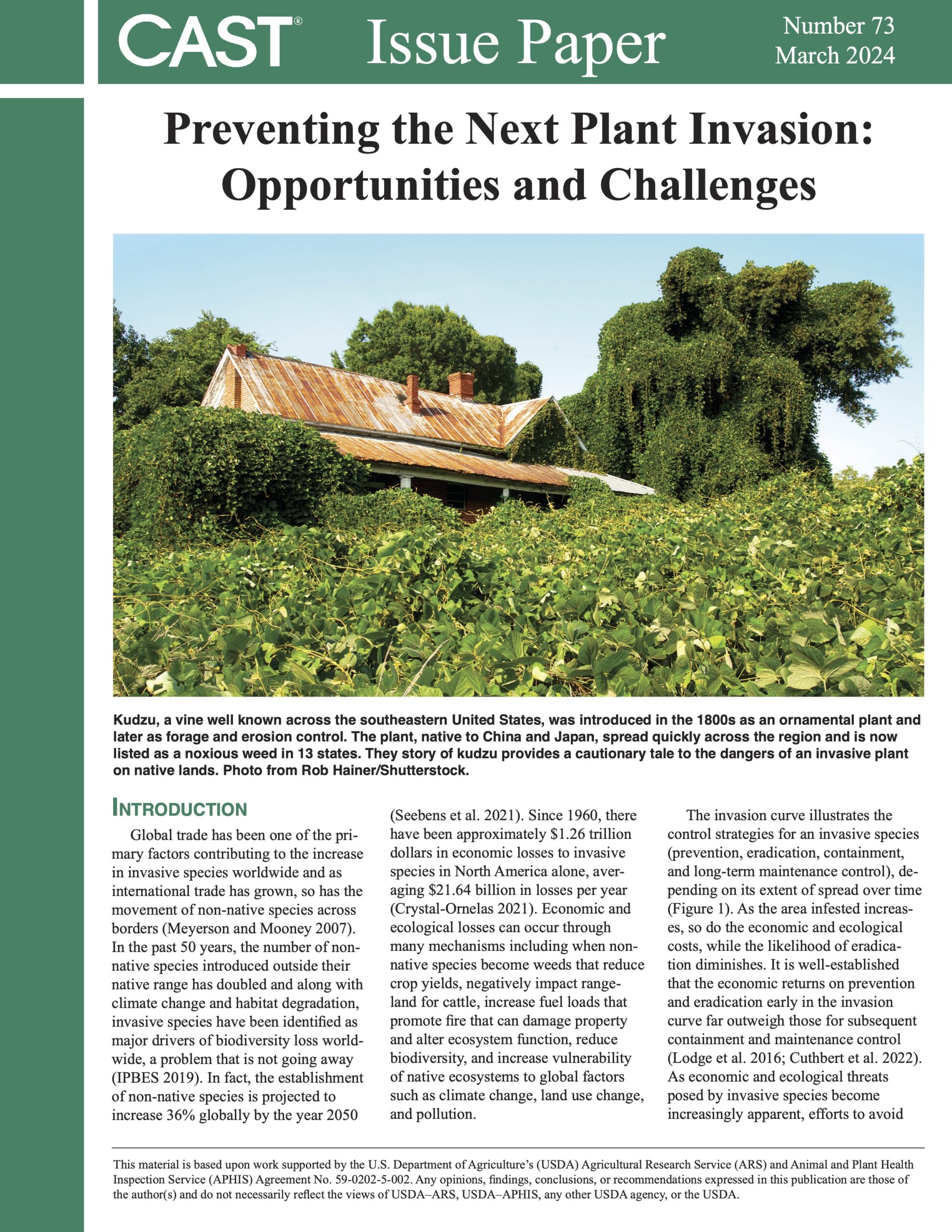
CAST_IP73_Invasive-Plants-scaled-1.jpg
https://doi.org/10.62300/UOBB6546
This paper explores the invasion process, pathways of introduction, and the role of risk assessment in preventing future invasions. It reviews qualitative, semi-quantitative, and quantitative risk assessment approaches, their applications in regulatory and non-regulatory contexts, and associated tools used in the United States and internationally.
Task Force Chairs
Penn State University
University of Cincinnati
Authors
University of Connecticut
University of Galway
University of Hawai'i
University of Illinois
Loyola University Chicago
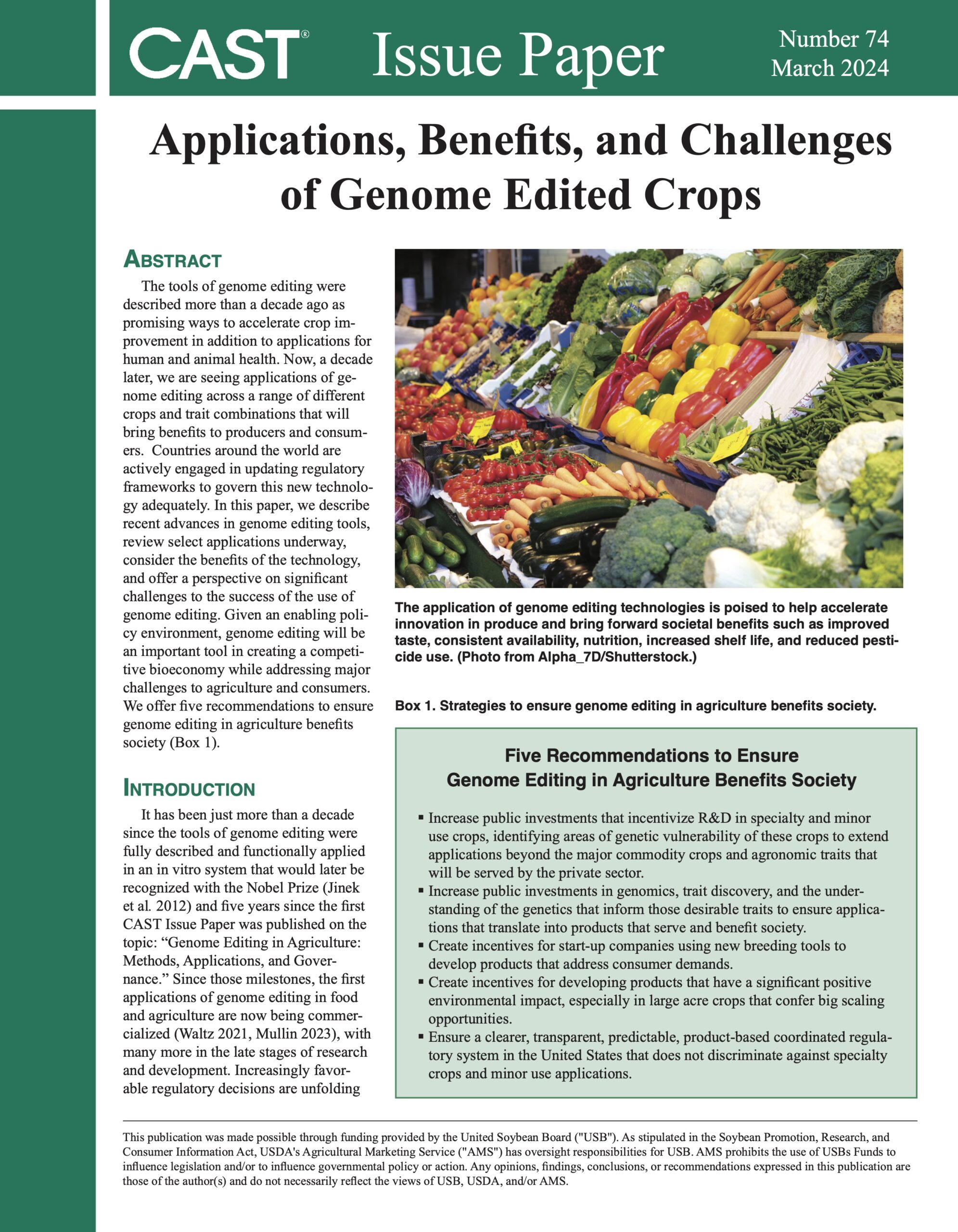
CAST_IP74-Gene-Edited-Crops-scaled-1.jpg
https://doi.org/10.62300/HJVU4083
In this paper, we describe recent advances in genome editing tools, review select applications underway, consider the benefits of the technology, and offer a perspective on significant challenges to the successful use of genome editing. Given an enabling policy environment, genome editing will be an important tool for creating a competitive bioeconomy while addressing major challenges in agriculture and for consumers. We offer five recommendations to ensure genome editing in agriculture benefits society.
Task Force Chairs
Okanagan Specialty Fruit
Authors
North Carolina State University
Corteva Agriscience
International Food Policy Research Institute
American Seed Trade Association
Pairwise
Cold Spring Harbor Laboratory
International Institute of Tropical Agriculture
University of Nevada- Reno
FIFRA_ESA_Essay-6-scaled-1.jpg
This paper examines the intersection of the Federal Insecticide, Fungicide, and Rodenticide Act (FIFRA) and the Endangered Species Act (ESA), focusing on the role of State Lead Agencies (SLAs) in implementing pesticide programs that comply with ESA requirements. It outlines the historical context of FIFRA and ESA integration, including the development of the Endangered Species Protection Program (ESPP) and the EPA’s ESA Workplan.
Task Force Chairs
Compliance Services International Lakewood
University of Georgia
Authors
Washington State Department of Agriculture
Compliance Services International
🔗 Publications Repository

This repository houses all official CAST papers, including final published versions, DOIs, and citation information. It serves as the permanent reference point for researchers, policymakers, educators, and media seeking trusted, citable agricultural science.

👥 Task Force Index

CAST papers are developed by interdisciplinary task forces composed of volunteer authors, chairs, reviewers, liaisons, and translators from academia, industry, and government. This index recognizes those contributors and highlights the breadth of expertise that supports CAST’s work.

✍️ Propose a Topic

CAST welcomes topic proposals that address timely, relevant issues in agriculture, food, and environmental systems. Proposed topics are reviewed in collaboration with CAST work groups and staff to assess scientific merit, relevance, and alignment with CAST’s mission.