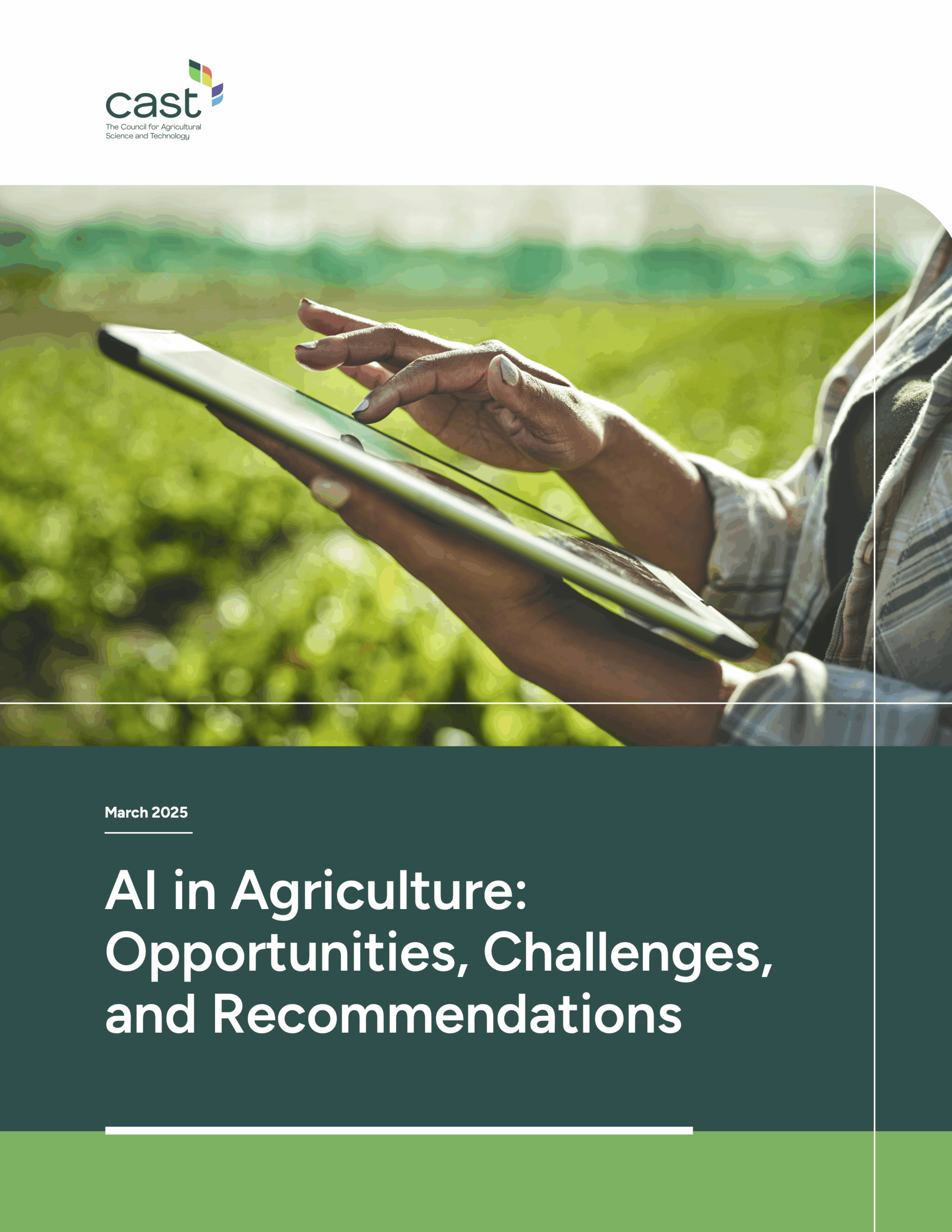
Artificial intelligence (AI) is rapidly transforming agriculture by enabling data-driven decision-making, automation, and predictive analytics across the food and agricultural system. Advances in machine learning, computer vision, robotics, and sensor technologies have expanded the ability of producers, researchers, and agribusinesses to monitor crops and livestock, optimize inputs, and respond to environmental variability with unprecedented precision.
This report examines the current and emerging applications of AI in agriculture, including crop and livestock monitoring, precision management, yield prediction, disease and pest detection, automation, and supply chain optimization. It explores the data sources, algorithms, and digital infrastructure that underpin AI-driven systems, as well as the role of AI in enhancing sustainability, productivity, and resilience under climate and resource constraints.
The report also addresses key challenges associated with AI adoption in agriculture, including data quality and availability, model transparency, workforce readiness, cybersecurity, equity, and ethical considerations. By synthesizing recent research and real-world applications, this report provides an overview of how artificial intelligence can support more efficient, sustainable, and resilient agricultural systems, while highlighting research, policy, and extension needs critical for responsible and effective implementation.